
-
 files/RSP100DCx2.webp
-
 files/175W_f927bcc3-bd86-4fac-b007-b7f7f5a65d47.webp
-
 files/RSP200DC-Mainfunction_baf5ac72-4ac1-4841-8609-52ecd3792b11.webp
-
 files/RSP200DC-3_86578135-5b56-47a7-a273-24235c8cce16.webp
-
 files/RSP200DC-1_51838734-f9ab-43e2-b3d5-afb7aab2f7fb.webp
-
 files/RSP200DC-4_6fe0533b-8411-4057-8bc7-a3a19ea19a2c.webp
-
 files/RSP200DC-2.webp
-
 files/RSP200DC-5.webp


- Regular price
- $0.00
Estimated shipping time
Estimated shipping time
You can typically expect your items to arrive within 4–7 business days, depending on your location and product availability.
What is your Return Policy?
What is your Return Policy?
At Prime Source Industrial, we want every customer to shop with confidence. If something doesn’t go as planned, we’ve made returns and refunds simple and fair. Here’s how it works:
1. Return Window
You can request a return within 30 days of receiving your order. Unfortunately, we’re unable to accept returns after that time frame.
2. Who Pays for Return Shipping?
- If your item arrives damaged, defective, or incorrect, we’ll cover the return shipping cost.
- If you’re returning an item because you changed your mind, you’ll be responsible for return shipping fees.
3. Damaged or Defective Items
Received something broken or not working properly? Contact us within 30 days. We’ll provide a prepaid return label and once the item is returned and inspected, we’ll issue either a full refund or a replacement—including any original shipping costs.
4. Changed Your Mind?
If you no longer want the item, you can return it within 30 days—as long as it's unused, in its original packaging, and in resellable condition. You’ll need to handle the return shipping, and once we receive and inspect it, we’ll refund the product cost (excluding shipping).
5. Refund Processing
Once we receive and approve your return, we’ll send a confirmation email and issue a refund to your original payment method within 7 business days. Please allow additional time for banks or credit card companies to process and reflect the refund.
If it’s been over 10 business days since your refund was approved and you still don’t see it, contact us at support@PrimeSourceIndustrial.com and we’ll look into it immediately.
6. Restocking Fees
In some cases, a restocking fee may apply depending on the item and return reason. If applicable, we’ll clearly communicate this during your return request process.


The Renogy 100W N-Type Solar Panel is a compact rigid solar panel designed for efficient off-grid power in RV, marine, rooftop, outdoor, and home solar applications. This selected option includes 2 pieces, making it a practical setup for small solar systems or expanded power capacity in space-conscious installations.
Built with monocrystalline silicon solar cells, tempered glass, and an anodized aluminum alloy frame, this panel is made for dependable outdoor use. It features N-Type cell efficiency, wind and snow resistance, an IP65-rated junction box, IP67 solar connectors, and compatibility with 12V and 24V systems for flexible solar installation.
KEY FEATURE
- 100W maximum power at STC
- Selected option: 100W / 2 Pieces
- SKU: RSP100DCx2-US
- N-Type monocrystalline solar panel
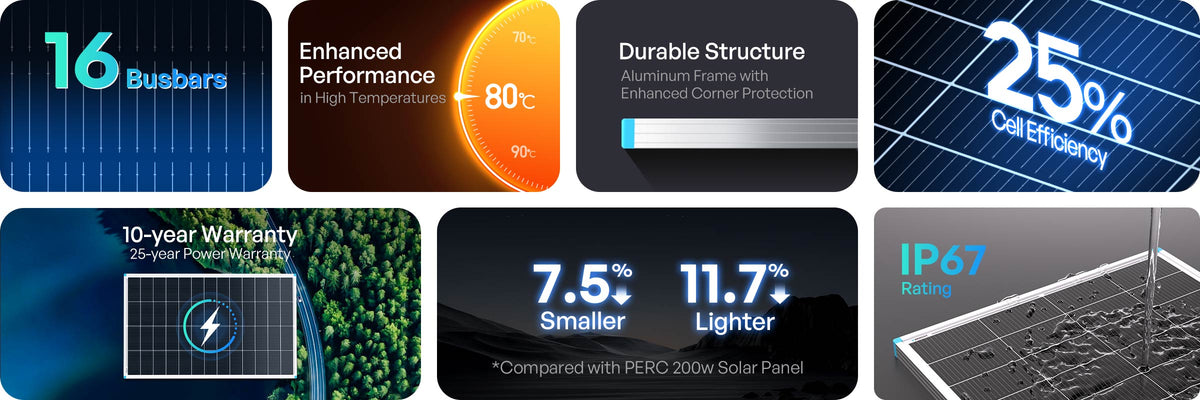
- 25% efficiency with N-Type cells
- 20.0% module efficiency
- Compatible with 12V and 24V systems
- Compact, easy-to-install rigid panel design
- Low temperature loss and high heat resistance
- Withstands 2,400Pa wind loads
- Withstands 5,400Pa snow loads
- IP65-rated junction box
- IP67-rated solar connectors
- Tempered glass front
- Anodized aluminum alloy frame
- CE certified
- ISO 9001 quality management certification
- 25-year power output warranty
- 10-year material and workmanship warranty
PRODUCT DETAILS
Product Name: 100/175/200W N-Type Solar Panel
Brand: Renogy
Product Type: N-Type Monocrystalline Solar Panel
Material: Monocrystalline silicon solar cells, tempered glass, anodized aluminum alloy frame
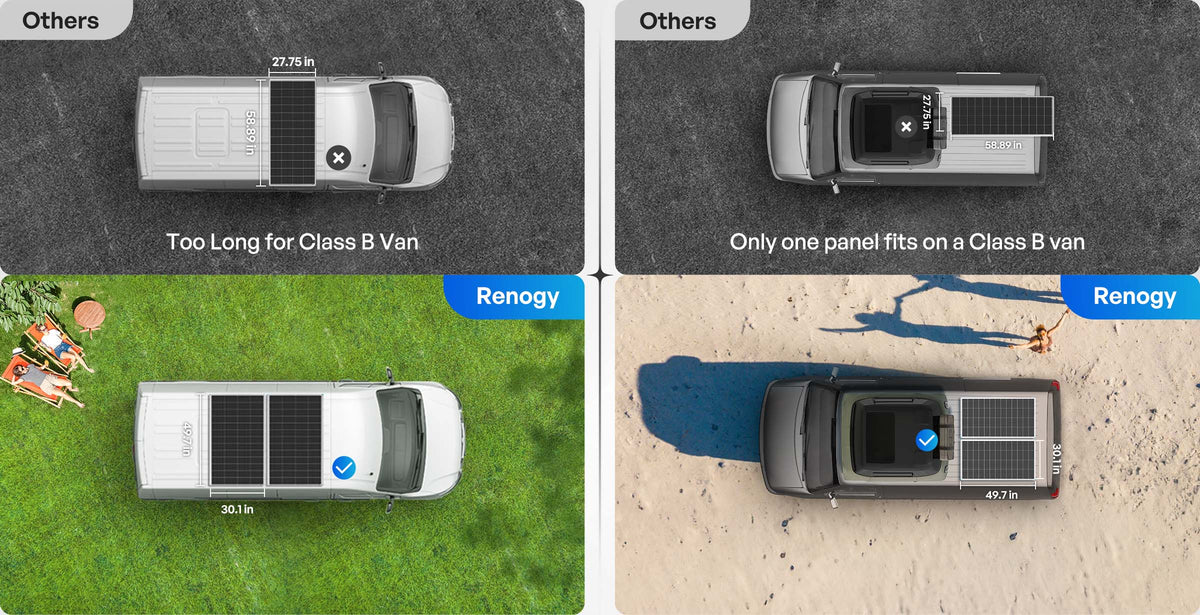
Dimensions: 865 x 578 x 30mm / 34.1" x 22.8" x 1.2"
Use: RV solar systems, marine solar setups, rooftop solar installations, outdoor power systems, home solar applications, and off-grid energy systems
The Smart Start to Your Solar Journey
Made to Fit Your Van Life
Advanced N-Type PerformanceMore Power, Less Loss
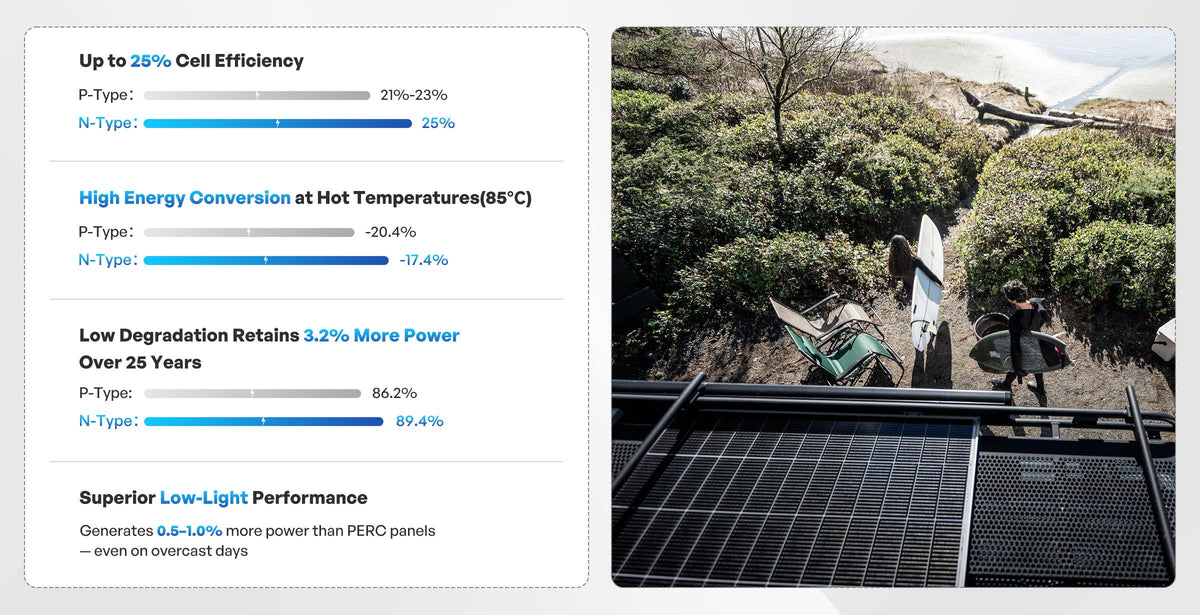
N-Type cells deliver higher coversion efficiency, better heat tolerance, and more stable output over time, outperforming traditional cell (PERC) technology in real-world conditions. The result is more usable energy from the same sunlight, year after year.
Premium Materials for the Long Haul
From protective EVA and POE layers to a rigid aluminum frame and tempered low-iron glass, every layer is chosen for durability, so your panel stays reliable through years of travel and changing weather.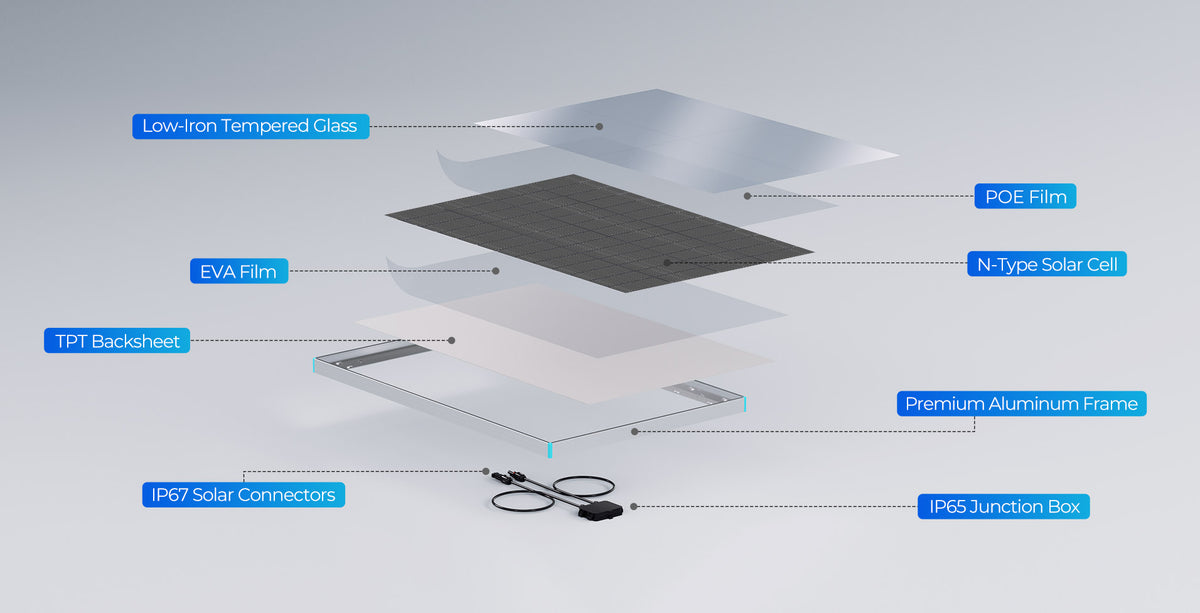
Wind & Snow Resistance
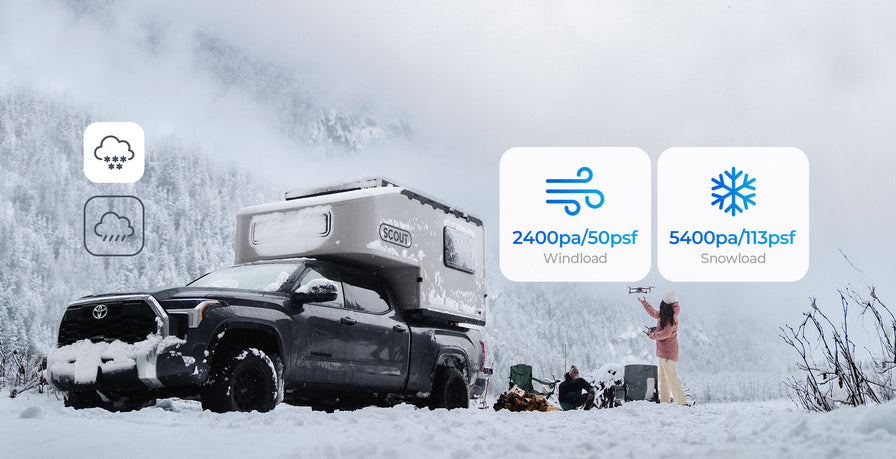
Withstands 2,400Pa wind loads (about 50 psf) and 5,400Pa snow loads (about 550 kg/m²). Built to stay secure through extreme winds, heavy snow, and decades of demanding use.
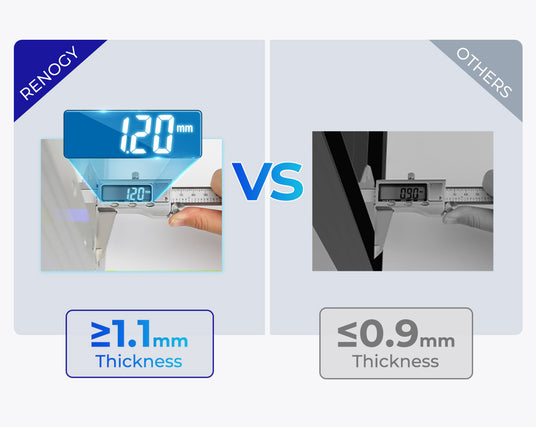
Strong Enough for the Roughest Roads
Crafted with a durable aluminum alloy frame, it withstands bumps, vibrations, and tough road conditions for long-lasting durability.
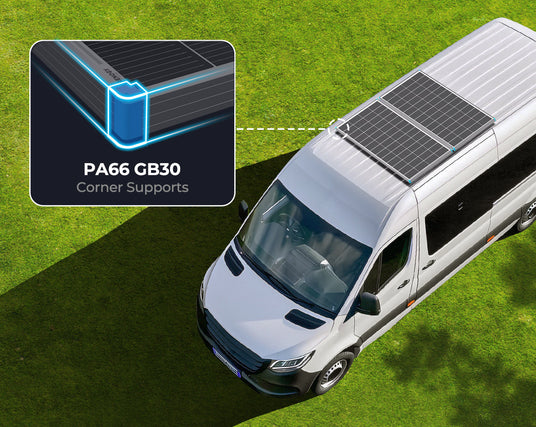
Faster Install, Fewer Worries
Reinforced frame corners strengthen high-stress points, providing a faster, more secure setup and reducing impact damage during installation and transport.
Specs
Resources Download
100w Datasheet Warranty
Frequently Asked Questions
What do I need to complete my off-grid solar power system ?
A solar panel has to be connected a charge controller to regulate current, and a battery to store the electrical power. You will need adapter kit cables to wire the solar panel(s) and charge controller, and tray cables connecting the charge controller to a deep-cycle battery.
What does off-grid and on-grid mean ?
On-grid simply means solar power equipment (array or solar panel) is connected to the electrical grid, while off-grid refers to systems that are not connected to the grid and therefore store the generated power for later use. Off-grid systems are not affected by grid blackouts.
Why is my solar panel under producing?
Solar panel performance may be hindered for a number of reasons. Most commonly environmental conditions such as indirect sunlight, temperature rise, cloudy sky, and dirt and stain build up on the top glass will cause a reduced power output.
How should I connect solar panels in my electrical circuit (series vs parallel)?
Solar panels can be connected in series or in parallel to meet your electrical circuit size and power demand. Connecting solar panels in series will have the effect of adding up their operating voltage output, while system current output will be the same as that for one panel. While, connecting solar panels in parallel will have a different effect; individual panels operating current output will add up to be the system output current, while system output voltage will be the same as the output voltage of one solar panel. To meet the optimum power output and system rating for your power system, you can use both parallel and series connections.
How many solar panels do I need ?
The best way to gauge how many solar panels you need, is to understand and define the power load needed from this system. Power is measured in Watts, and capacity is commonly measured in Watt-hours (multiplying power output in watts by the required number of hours of operation multiplied by a safety factor of 1.5-2). Therefore, it is wise to size your battery bank first based on the minimum required capacity, and accordingly decide how many panels or how much power input is needed.
What is the meaning of 24V in the product title, Why is this value different from the voltage of the solar panel?
When you open the product page, you will see a title like "xxx Watt 24 Volt Monocrystalline Solar Panel". The "24V" here does not refer to the voltage of this solar panel (VOC or VMP), but to the fact that one xxxW solar panel is suitable for 24V system (i.e. a 24V battery), no need for additional series and parallel connections. Therefore, these are two completely different values with different meanings.
How to choose a controller suitable for my Renogy 16BB N-Type 200 Watt 24V Solar Panel?
To choose a suitable controller for your Renogy 16BB N-Type 200 Watt 24V Solar Panel, it's important to consider the panel's optimized voltage designed for efficient energy conversion, with an open-circuit voltage (Voc) of 37.44V; for single or parallel connections, the controller's maximum PV input voltage should be at least 40V, while for series connections, the controller's maximum PV input voltage should be no less than 40V multiplied by the number of panels connected in series, ensuring optimal performance and compatibility with your solar panel system.